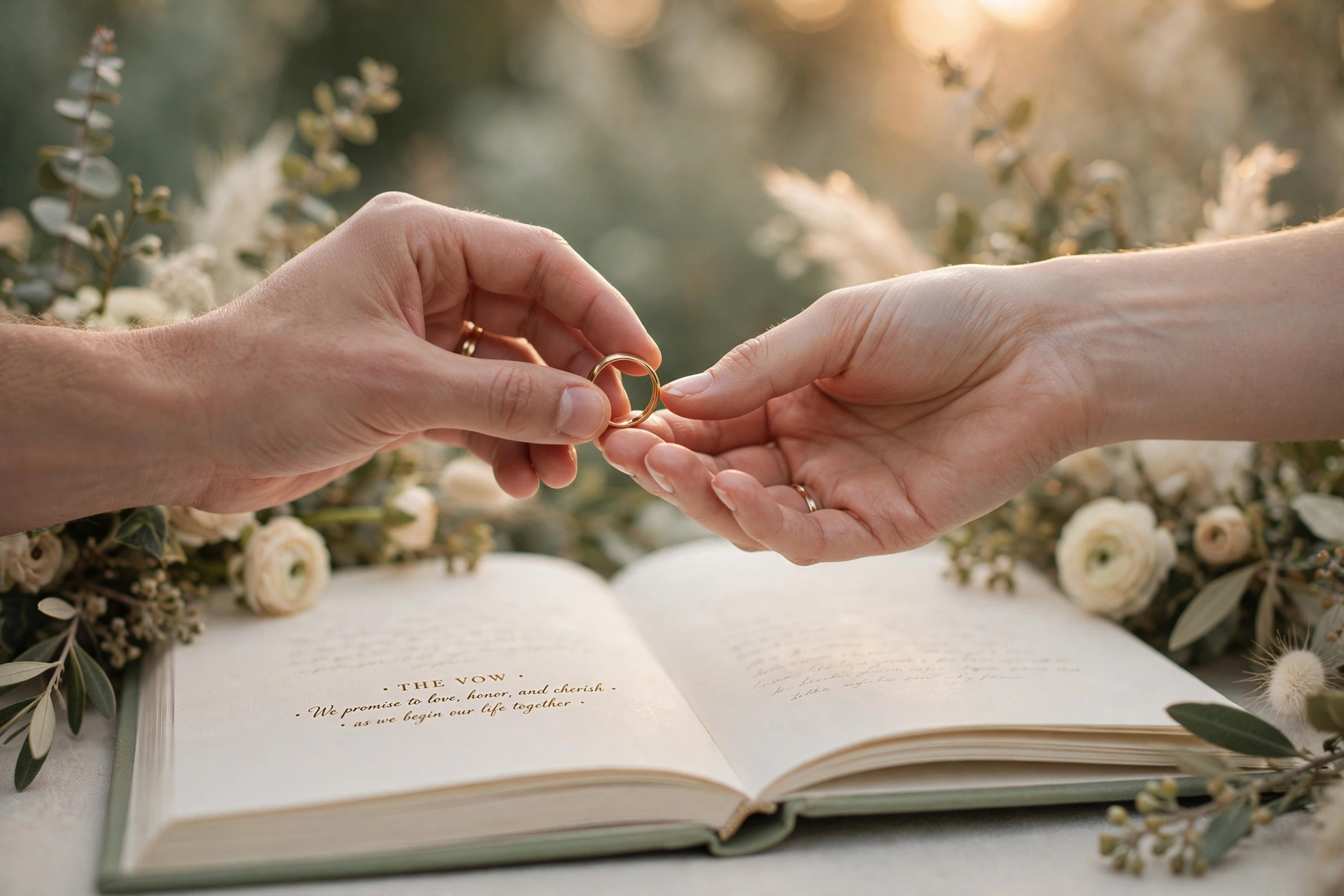
If you have never worked with a wedding officiant before, it can be hard to know what is normal, what to ask for, and what happens behind the scenes. In general, the officiant leads the ceremony, guides you through the vows and the signing, and makes sure the legal paperwork is handled correctly. This page explains that process, from the first conversation to the days after the wedding. It is general education, not legal advice — for a specific legal question, check with the county clerk or a qualified professional.
The first conversation
The first conversation is usually a short call or meeting, and a chance for both sides to check fit. The officiant will often ask about your date, time, and venue, the size and style of ceremony you have in mind, and whether you want a religious, non-religious, or blended ceremony. They may ask about readings, music, family participation, and any traditions that matter to you.
You should also ask questions of your own: what ceremony types the officiant offers, how much input you will have on the script, whether they attend a rehearsal, what is included in the fee, and how the marriage license is handled. Ask about travel, arrival time, and what happens if plans change. A clear answer at this stage is a good sign.
Between booking and the wedding
Once you have booked, the main work is drafting the ceremony script. Many officiants will send a draft, or a set of options, and invite you to suggest changes. This is your chance to shape the tone: formal or relaxed, short or detailed, personal or traditional. Read the draft aloud if you can, because wording that looks fine on paper can sound different when spoken. Agree a final version in good time, so neither side is making last-minute changes.
A rehearsal is not always included, so check whether yours is. At a rehearsal, the officiant usually walks through who stands where, the order of the ceremony, and the cues for entrances, readings, vows, and the ring exchange. Even a short rehearsal can remove a great deal of uncertainty, especially if the wedding party is large or the venue is unfamiliar.
The officiant will also help settle the timeline: when guests should be seated, when music starts, how long each part will take, and where the signing happens. They may coordinate with the venue, so the ceremony fits the space and any venue rules, and with the photographer, so key moments are visible without the ceremony feeling staged.
On the day
On the day, expect the officiant to arrive early — often well before guests are seated — to check the setup, meet the wedding party, and confirm the order with the venue and any musicians. They will usually give simple cues throughout: when to walk in, when to stand, when to face each other, and when to pause for a reading or for photographs. You do not need to memorize the ceremony; following those cues is part of the officiant’s job.
Nerves are normal, and a good officiant will pace the ceremony to help, speaking slowly and pausing between sections. Readings, if you have chosen them, usually come before or after the vows, and the officiant will introduce the reader and signal when to begin. For the vows, some couples repeat lines after the officiant, while others read their own words — agree this in advance, and bring a printed copy as a backup if you are reading your own.
The ring exchange follows the vows, with the officiant guiding who gives which ring and what to say. Then comes the pronouncement, when the officiant declares you married, followed by a kiss or another gesture you have agreed. The signing of the marriage license usually happens straight after, either at the ceremony space or in a quieter spot nearby, with the witnesses you have chosen. The officiant will check that names, dates, and signatures are correct before the license is put away for return.
After the ceremony
After the ceremony, the officiant is responsible for returning the signed California marriage license to the county clerk or recorder, usually within 10 days of the ceremony. Ask your officiant to confirm when they have sent it, and keep a note of the date. The county then records the license, and only after that can certified copies be issued.
Certified copies are the official proof of marriage that banks, insurers, and government offices usually ask for. You normally order them from the county clerk or recorder where the license was filed, and there may be a fee per copy. It is worth ordering more than one if you expect to update several records, and keeping at least one copy somewhere safe.
What is not normally included
An officiant’s role is focused on the ceremony itself. Unless you have agreed otherwise in writing, the following are not normally included: the venue, photography, music, flowers, catering, or any reception planning. An officiant also does not normally give legal advice, draft legal documents beyond the ceremony and license paperwork, or advise on visas, taxes, or name-change law. If you need help in those areas, ask a qualified professional in that field.